When you weigh up buying a District 1 apartment to rent out, the key question is not "how much does it cost" but "who will rent it, and will they keep renting". At Grand Marina Saigon in Ba Son, the answer is tied to location: the project sits next to District 1's Grade-A office core, about 250 m from Ba Son Metro station, and right by the Saigon River. This article looks specifically at why the Ba Son location creates expat tenant demand — kept separate from the sale-price numbers — so you can see the yield case through the lens of location.
How does the Ba Son location create rental demand?
Ba Son sits inside District 1's financial core, surrounded by Grade-A offices, consulates and international amenities — and that very audience generates steady demand for high-end rentals.
Most luxury tenants in District 1 are expatriate professionals, regional directors, senior staff of multinationals and diplomatic personnel. They prioritise living close to work, within walking distance of restaurants, international banks and cultural landmarks. Grand Marina at 02 Ton Duc Thang fits that brief exactly: the Opera House, Nguyen Hue walking street and Ben Thanh Market are all within 1 km, while Vincom Dong Khoi, Saigon Centre/Takashimaya and Diamond Plaza sit just 1–1.3 km away. This is the "walk to everything" location that premium tenants will pay for.
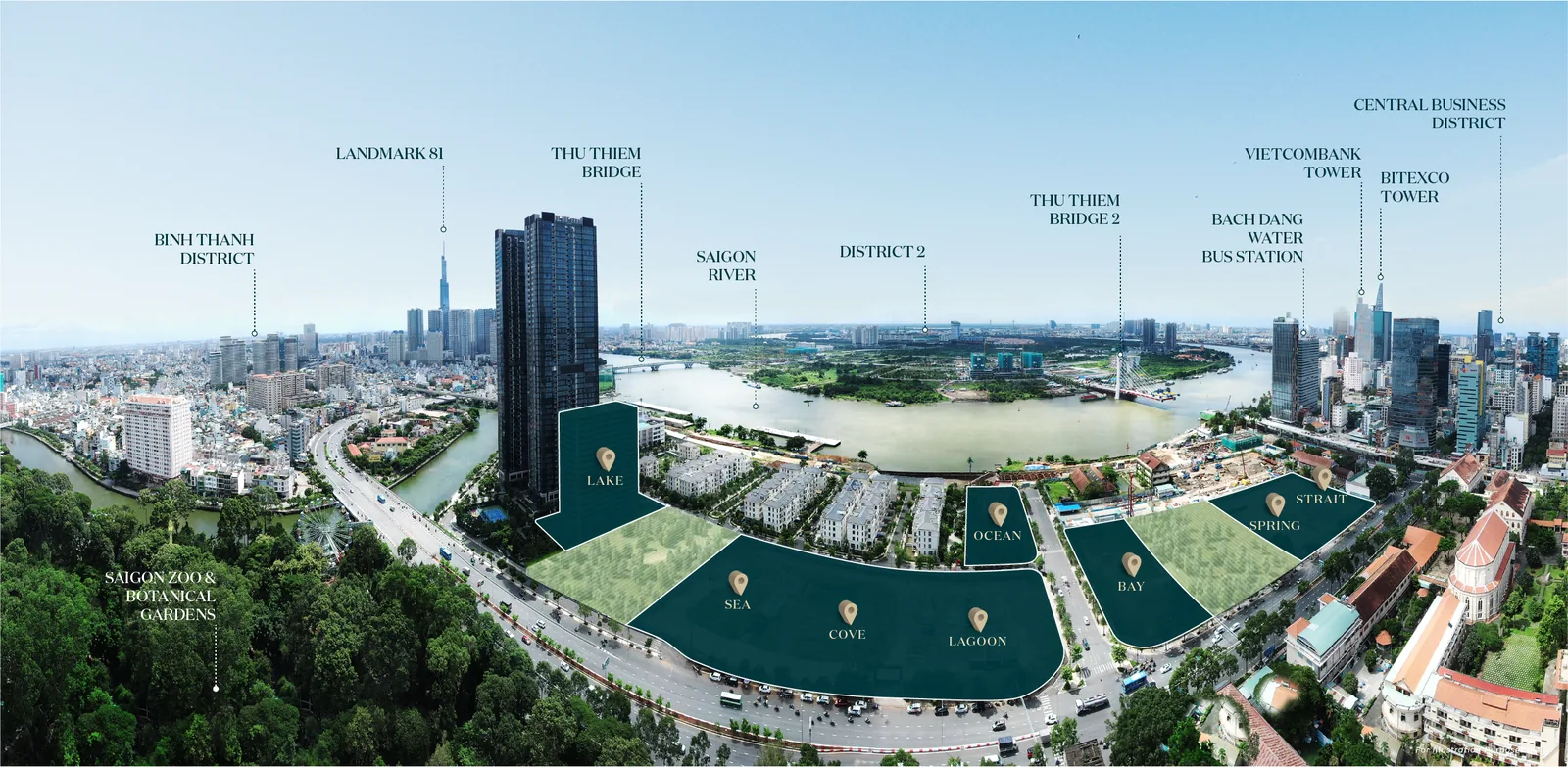
Unlike many areas far from the centre, Ba Son is not a dormitory district — it combines workplaces, leisure and high-quality housing within one short radius. That mix is exactly why apartments here are less likely to sit empty for long compared with purely residential pockets.
Who is the typical tenant at Ba Son?
The typical tenant is an expat professional or senior executive working in District 1's core, a family with children at international schools, plus a short-let segment that values Marriott-standard service.
- Specialists and regional managers at banks, law firms, and technology and finance groups with District 1 offices.
- Expat families with children at international schools such as BIS, ISSP and AIS — they favour central, easy-to-commute locations.
- Diplomatic and consular staff based near the representative offices in the centre.
- Short-stay and long-business tenants who need 24/7 concierge and hotel-grade security.
Each of these groups values location and service over maximum floor area at a low price. That is why a central branded residence usually targets a rental segment with strong ability to pay and high expectations for operating standards. To understand why the brand factor matters so much to these tenants, you can read What are branded residences?
If you want to know which unit type — 1BR, 2BR or Dual-Key — suits each tenant group, send a message and we can talk specifics.
How do Ba Son metro and connectivity affect rentability?
With Ba Son metro station about 250 m from the project, tenants can move quickly across the inner city — a strong plus for expats used to public transport.
Metro Line 1 (Ben Thanh – Suoi Tien) is now in commercial operation. From Ba Son station, stated travel times are roughly 1 minute to Ben Thanh, about 30 seconds to the Opera House area, and 5–8 minutes to An Phu/Thao Dien. For expat tenants who dislike rush-hour congestion, a metro station within walking distance is an increasingly common requirement when viewing homes. For distances and benefits, see Metro Line 1 Ba Son Station: Walk Times & Value Impact.
Beyond the metro, the project is about 200 m from the Saigon River, 2 km from the Thu Thiem Tunnel, 4 km from Landmark 81 and 8 km from Tan Son Nhat Airport. This multi-directional network lets the apartment reach several different tenant pools — from people working in District 1 to those who regularly cross to Thu Thiem or head to the airport.
The river and city views are also a hallmark of the Ba Son location that high-end tenants are willing to prioritise — something hard to replicate in other parts of the city.
How do nearby international schools pull in family tenants?
Reasonable proximity to major international schools helps Ba Son attract expat family tenants — a group that tends to rent long-term and stay put.
Expat families usually choose where to live based on their children's school first, then work. Schools such as BIS (District 3), ISSP (Binh Thanh) and AIS (Thu Thiem) are all within a reasonable commute of Ba Son, especially with the Thu Thiem Tunnel and Thu Thiem Bridge 2. Family tenants tend to sign longer leases (1–2 years) and rarely move mid-school-year, which lowers vacancy and re-letting costs. For the schools and routes, see International Schools Near Grand Marina: BIS, ISSP, AIS Guide.
For a landlord, one long lease from a family with school-age children is often "worth more" than several high-priced but broken short lets — a point worth weighing when you position your apartment for the right tenant pool.
Ba Son vs Thao Dien vs Thu Thiem for location
Ba Son wins on proximity to the District 1 office core and the inner-city metro, while Thao Dien is strong on an established expat community and Thu Thiem is a new district still taking shape.
| Criterion | Ba Son (District 1) | Thao Dien (old D2) | Thu Thiem |
|---|---|---|---|
| Near D1 office core | Walk / 1 metro stop | 5–8 min by metro | Via bridge/tunnel |
| Expat community | Growing, central | Long-established | Emerging |
| Walkable amenities | Very high | Moderate | Developing |
| River/city views | Saigon River + city | Riverside | Faces District 1 |
The table above is a qualitative reference only, not individualised investment advice. Each area has a different tenant pool, so the right choice depends on your specific goals. For a deeper comparison, read Ba Son vs Thao Dien vs Thu Thiem: Which Location to Buy?, or see the overview on the Location & connectivity page.
Indicative rental yield and what to keep in mind
Per the reference data on this site, monthly rents at the project run roughly VND 25–120 million depending on unit type, with an indicative yield of 3.5–5% per year — but actual results depend on timing, unit type and policy.
| Unit type | Indicative area | Indicative rent / month |
|---|---|---|
| 1 bedroom | ~50–60 m² | VND 25–40 million |
| 2 bedrooms | ~70–90 m² | VND 40–70 million |
| 3 bedrooms | ~110–140 m² | VND 70–120 million |
These figures are indicative and change with each sales phase and market conditions. According to research firms such as Knight Frank and Savills (over 2023–2025), branded residences are typically priced 25–35% above comparable non-branded apartments — this is a market reference, not a promise of price growth or yield. Actual yield also depends on the purchase price, operating costs (management fee ~USD 8–9/m²/month) and occupancy. I don't give individualised investment advice; you should review the legal documents and the phase-by-phase price list before deciding.
Want a rough yield estimate for a specific unit type based on current prices? I can send the latest price list so you can run the numbers.
Conclusion: location is the core of Ba Son's rentability
A central District 1 location, close to the metro and international schools, is the foundation of steady rental demand at Ba Son — but every figure is indicative and should be confirmed at the time of purchase.
In short, the rental appeal of Grand Marina Saigon comes from the Ba Son position itself: near work, near the metro, near schools, near cultural landmarks — exactly what the expat professional tenant pool looks for. This is a view on location and rental demand, not a substitute for detailed legal and financial due diligence. Get in touch for specific documents before you make a decision.
Note
Prices, areas and timelines may change per the developer's official announcements. Please contact us on Zalo 0903 475 802 for the latest documents and price list.