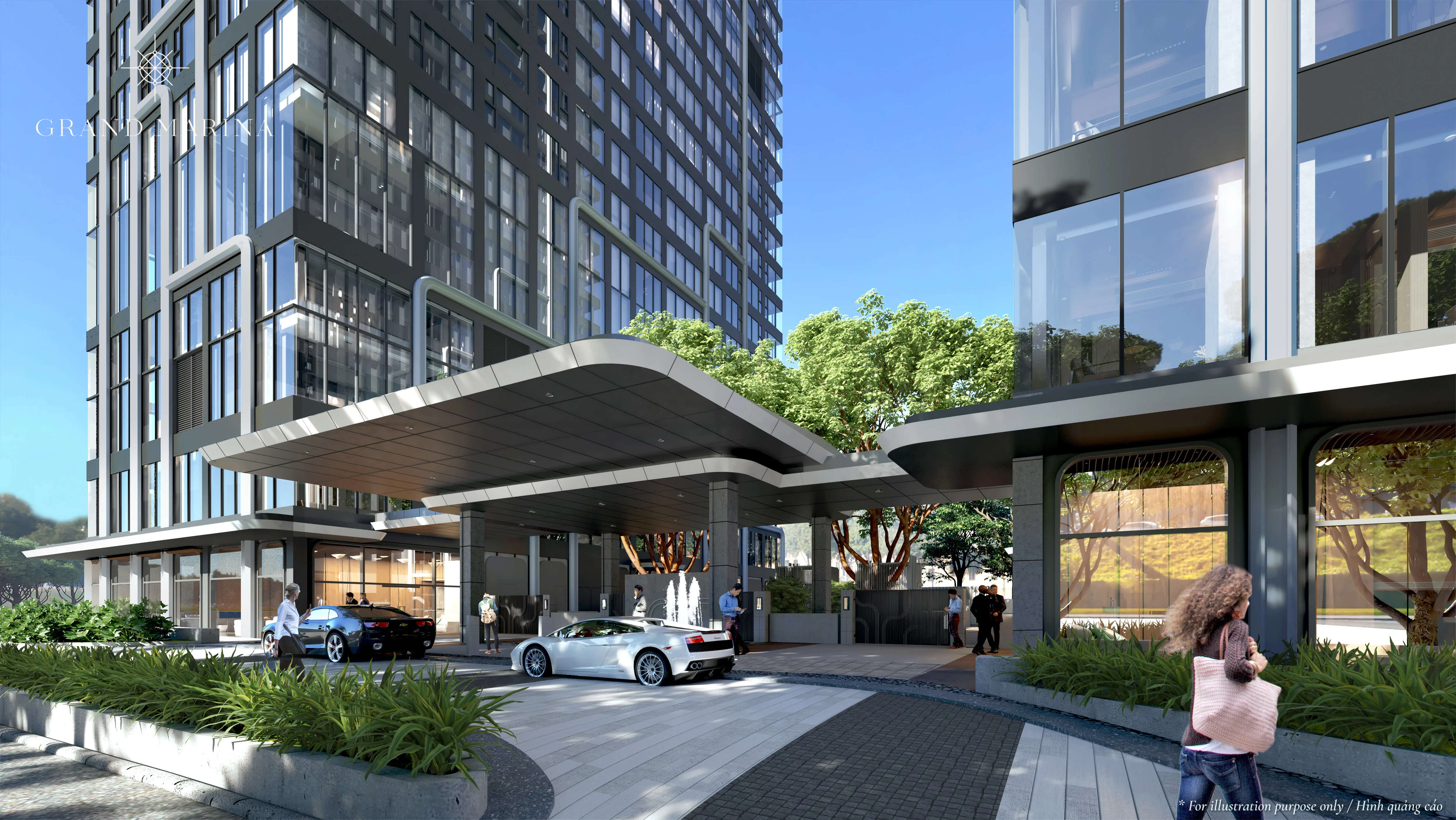
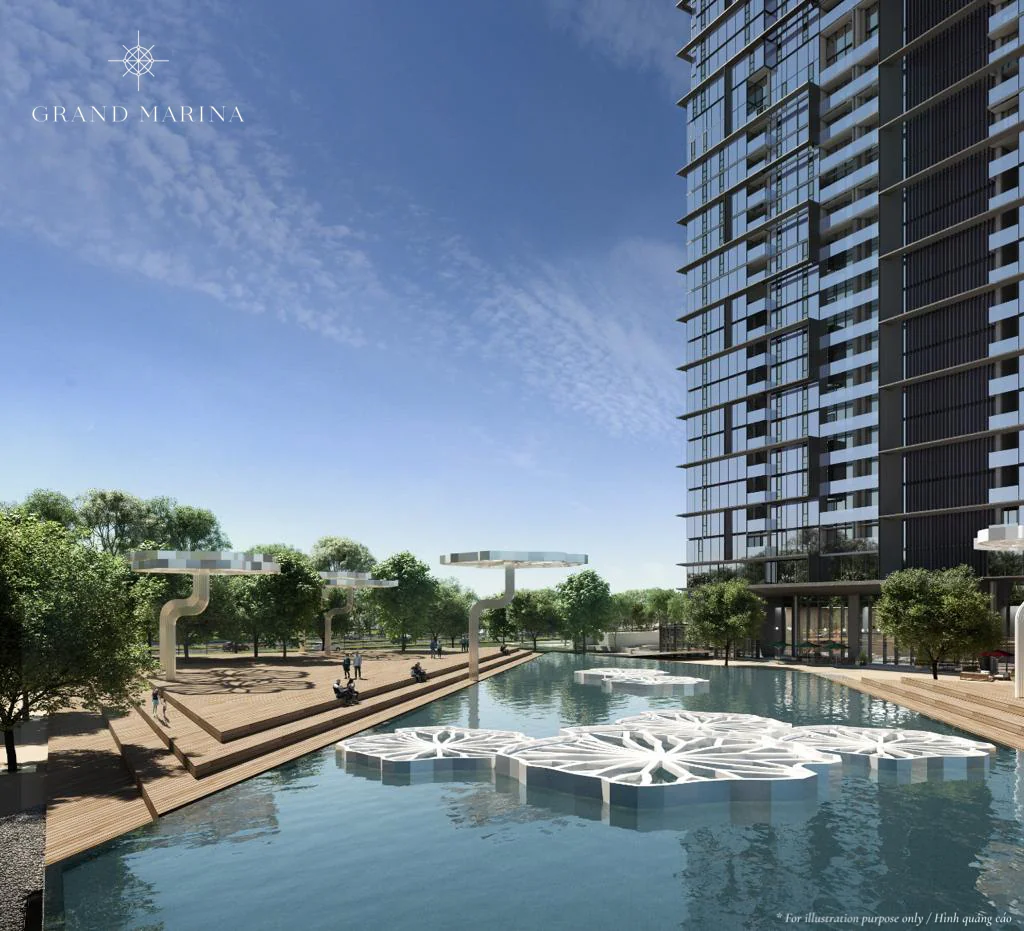
When your budget stretches to both, the real dilemma is between a branded residence (operated by a hotel brand such as Marriott) and a conventional luxury apartment (non-branded). The two behave very differently on entry price, rental cash flow, running costs and — crucially — resale. This guide lays out a neutral comparison framework, then applies it to a concrete case: Grand Marina Saigon, Vietnam's first Marriott & JW Marriott Branded Residences, set on the riverfront at Ba Son in District 1.
1. What actually separates branded from non-branded?
A branded residence is a property named and serviced by an international hotel brand, while a non-branded apartment is a pure real-estate product with no service brand attached.
The difference isn't "prettier or not" — it's the operating model. A branded residence comes with a management contract with an operator like Marriott, committing to handover standards, a service team and maintenance discipline across the asset's life. At Grand Marina, the operating contract with Marriott runs for 20 years (the developer subsidizes the management fee for the first 3 years), something a typical non-branded project simply doesn't carry.
- Brand & operations: branded carries the Marriott/JW Marriott name and hotel-grade service; non-branded is run by an in-house board or an independent management company.
- Handover standard: branded is delivered fully fitted to brand specification; non-branded may be bare-shell or basic finish.
- Membership ecosystem: branded often includes perks such as Marriott Bonvoy; non-branded does not.
In other words, buying branded means buying a long-maintained service standard, not just four walls. If you want to understand the model itself first, read What are branded residences? before diving into the investment comparison.
2. The price premium: how much more do branded cost?
According to Knight Frank, branded residences are typically priced around 25–35% above comparable non-branded apartments — a market reference, not a fixed number for every project.
Knight Frank and Savills reports over recent years have consistently noted that the branded premium versus comparable non-branded stock in the same area commonly sits in the 25–35% range, and can run higher in scarce markets. This is international market data as published at the time of those reports and should be read as a reference — actual outcomes at any given project depend on location, brand, timing and policy.
The table below illustrates indicative price ranges for several unit types at Grand Marina (figures are indicative only and change by sales phase):
| Unit type | Indicative area | Indicative price |
|---|---|---|
| 1-bedroom (1BR) | ~50–60 m² | from ~20 billion VND |
| 2-bedroom (2BR) | ~70–90 m² | from ~35 billion VND |
| 3-bedroom (3BR) | ~110–140 m² | from ~60 billion VND |
| Sky Villa / Duplex | ~180–250 m² | from ~100 billion VND |
That premium is the price of the brand, the service and the operating standard. The right investment question isn't "how much more does it cost," but "does the market give that premium back to me on resale or rent." Detailed price lists by tower appear on the About the project page and are kept current over Zalo.
3. Rental & cash flow: which side wins?
Branded residences typically rent at higher rates and fill faster thanks to the brand, but service fees are higher too — so judge net yield, not headline rent.
At Grand Marina, indicative rents are noted around 25–40 million VND/month for a 1BR, 40–70 million for a 2BR and 70–120 million for a 3BR, with an indicative rental yield of roughly 3.5–5% per year. Tenants in the branded segment tend to be expatriate professionals and long-stay guests — a group willing to pay more for concierge, security and a core District 1 address.
- Rent level: branded usually commands more thanks to the brand and bundled services.
- Occupancy: a prime District 1 location plus the brand reach a more stable pool of premium tenants.
- Net cost: you must subtract the management fee of ~USD 8–9/m²/month and other running costs before computing true yield.
Importantly, there is no guaranteed return: actual yield depends on the unit, the leasing window and market conditions. That's why rent should be treated as one factor in the whole picture, not a fixed number to bank on.
4. Resale & liquidity: which asset moves more easily?
On the secondary market, branded residences tend to hold value well and attract a specific buyer pool, but the high total value means fewer buyers can financially qualify.
All Grand Marina towers have been handed over, residents are living in, and Marriott concierge is operating, so the secondary/resale market (2024–2026) is active. A completed asset that is being run to a brand standard is usually more transparent for a resale buyer than a non-branded project whose long-term management quality is still unproven.
Liquidity cuts both ways, though: a higher entry price means a narrower buyer pool, and whether you sell fast or slow depends on pricing, timing and market policy. If you're weighing District 1 projects, see Grand Marina vs The Marq: Which District 1 Home? for how two same-segment products compare head to head.
5. Cost of ownership: the part people forget
Branded residences carry clearly higher running costs, so an investor must fold all of them into the math before deciding.
Beyond the purchase price, a branded-residence owner should budget for: 10% VAT, a 2% maintenance fee (one-off), a management fee of ~USD 8–9/m²/month (subsidized for the first 3 years at Grand Marina), and a 0.5% registration fee. The management fee is higher than a non-branded apartment because it "buys" hotel-grade service: 24/7 concierge, multi-layer security, housekeeping, valet — the very things that sustain higher rent and resale value.
The right way to see it: service fees aren't simply "money lost," but a spend that preserves the asset's value and rental appeal. The point is to know the full number up front so you can compute a realistic net yield.
6. What should foreign buyers watch for with branded?
Foreigners can own a branded residence at Grand Marina on a 50-year tenure (renewable by law), capped at 30% of units per building — so check availability before placing a deposit.
Under current rules, foreigners may own an apartment for 50 years (renewable per Vietnamese law), are allowed to transfer and lease, and the project provides bilingual paperwork support. In a high-priced branded segment, the 30% per-building cap can be close to full in some towers, so confirming the remaining foreign "quota" early is an important step.
This is also a point of difference between projects: some Thu Thiem or other-area developments may have more headroom on the cap but differ in location and brand. You can read Grand Marina vs Empire City: District 1 or Thu Thiem? to weigh the District 1 core against the new urban area across the river.
7. So which one should you buy?
There's no universal answer — lean branded if you prioritize long-term value retention, brand and service; lean non-branded if you prioritize a lower entry price and higher gross rental yield.
A quick way to frame the decision:
- Choose branded when: you treat it as a long-term store of value, care about the brand & service, and accept a higher entry price and running costs in exchange for stronger liquidity and rental appeal.
- Choose non-branded when: you optimize for upfront capital, are comfortable managing operations yourself, and want a higher gross yield on a smaller outlay.
For Grand Marina specifically, the edge lies in a rare combination: a core District 1 location beside the Saigon River and the Ba Son metro (~250 m), the Marriott & JW Marriott brand, and a product that is already handed over and genuinely operating. If you're still torn between this and another comparable option, Grand Marina vs The Metropole Thu Thiem Compared offers another angle. Every figure on price, area and timeline in this article is indicative and may change per the developer's official announcements.
Note
Prices, areas and timelines may change per the developer's official announcements. Please contact us on Zalo 0903 475 802 for the latest documents and price list.