When weighing a branded residence like Grand Marina Saigon, most buyers fix their attention on the headline price and the payment plan. Yet for an asset you intend to hold for years, what really shapes your net return is the annual carrying cost — the money you pay, year in and year out, simply to own and run the unit, whether you live in it, rent it out, or leave it empty. This article unpacks each line: the Marriott management fee of 8–9 USD/m²/month, the 2% maintenance charge, parking, and the long-term fee risk tied to Marriott's 20-year operating contract.
What does the annual holding cost actually include?
Grand Marina's annual holding cost is mainly the operating management fee (per m² per month), parking, utilities and any letting-related costs — separate from the one-off 2% maintenance fee paid at handover.
Unlike a standard apartment, a branded residence is run to five-star hotel standards, so its cost structure looks different. The items to budget for each year include:
- Operating management fee: around 8–9 USD/m²/month (subsidised by the developer for the first 3 years).
- Maintenance fee: 2% of the unit value, paid once at handover (not an annual charge).
- Car/motorbike parking: per the building management's fee schedule.
- Electricity, water, internet: based on actual consumption.
- Letting costs: rental tax, agency fees, and refreshing interiors between tenancies.
Of these, the management fee is the largest and most worth watching, because it recurs every month and rises meaningfully once the subsidy period ends. This is exactly why many buyers are surprised when they run the real numbers for year four onward.
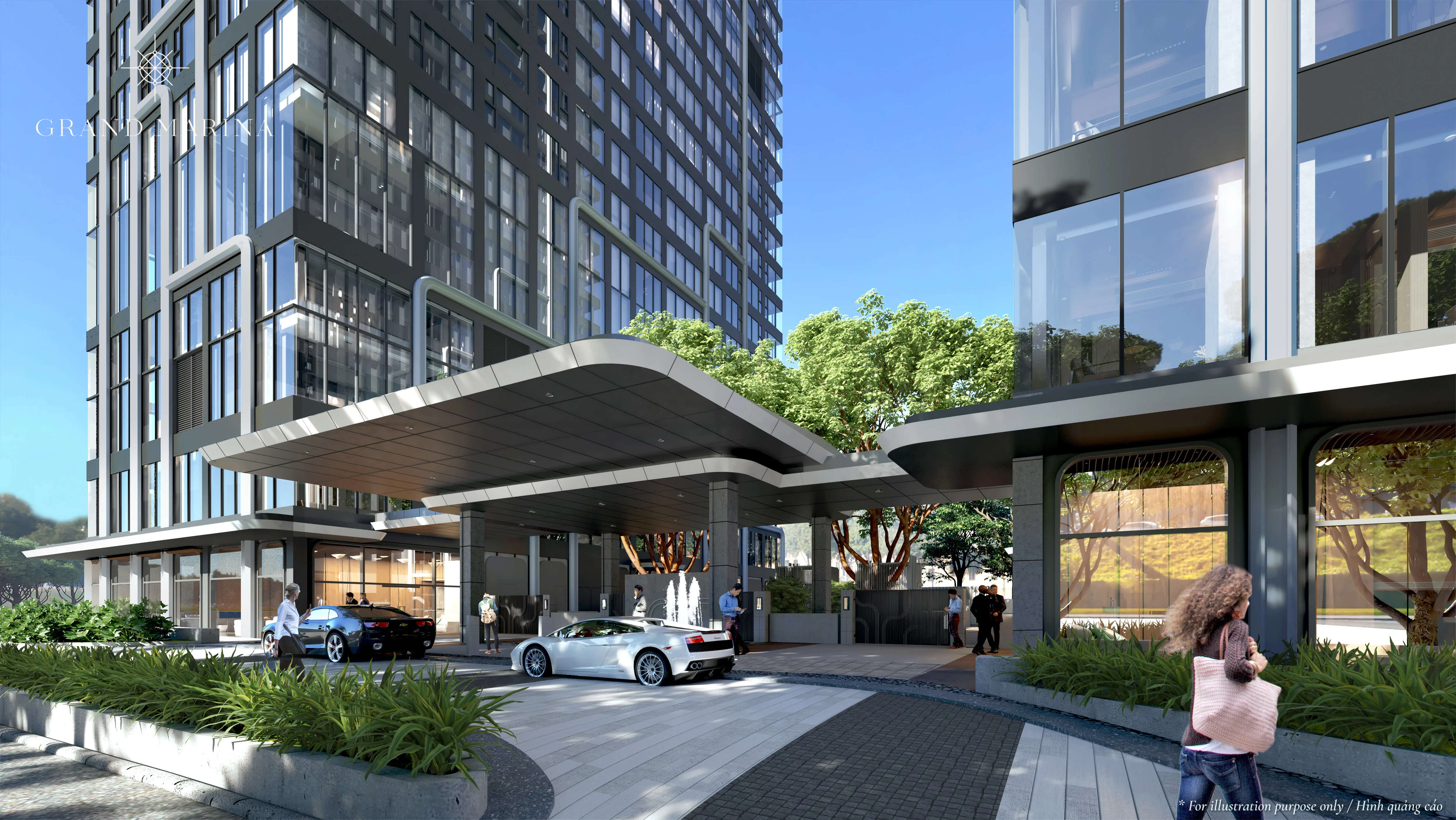
The 8–9 USD/m² Marriott fee: what it really costs per year
At 8–9 USD/m²/month, an 80 m² two-bedroom can run to roughly 640–720 USD a month — close to 8,000 USD a year once the 3-year subsidy period ends.
This fee buys Marriott-standard operation: 24/7 concierge, multi-layer security (CCTV, card and biometric access), upkeep of the facilities, common-area housekeeping, and management of the Sky Infinity Pool, Technogym fitness centre, spa and sky lounge. It sits well above a typical apartment fee because the service quality and operating team are on another level.
To make it concrete, the table below estimates the annual management fee by unit type (indicative figures, at an exchange rate of about VND 25,000/USD):
| Unit type | Area (indicative) | Fee/month (at 8.5 USD/m²) | Estimated/year |
|---|---|---|---|
| 1BR | ~55 m² | ~468 USD (~VND 11.7M) | ~5,600 USD (~VND 140M) |
| 2BR | ~80 m² | ~680 USD (~VND 17M) | ~8,160 USD (~VND 204M) |
| 3BR | ~125 m² | ~1,063 USD (~VND 26.6M) | ~12,750 USD (~VND 319M) |
These figures are illustrative only, to give you a sense of scale; the actual fee, area and exchange rate change by sales phase and by the building management's announcements. One important note: the developer subsidises this charge for the first 3 years, so your year-four cash flow will be noticeably heavier — something to build into your financial plan from day one.
Want the exact management fee for the specific unit you have in mind, and the date the subsidy ends?
How are the 2% maintenance fee and parking calculated?
The maintenance fee is 2% of the unit value paid once at handover, while parking is a separate monthly charge set by the building management's fee schedule.
The 2% maintenance fee goes into the building's sinking fund, used for future structural and mechanical repairs. For a two-bedroom priced around VND 35 billion, that is roughly VND 700 million — not trivial, but a one-time payment. You should keep it clearly separate from the monthly management fee so your budget stays accurate.
Parking (car and motorbike) is a recurring monthly charge; the exact rate is set by the building management and can change over time. There are also other one-off taxes and fees at purchase, such as 10% VAT and a 0.5% registration fee. If you want the full picture of upfront purchase costs, see our Pricing & payment page for the price structure and the charges that come with it.
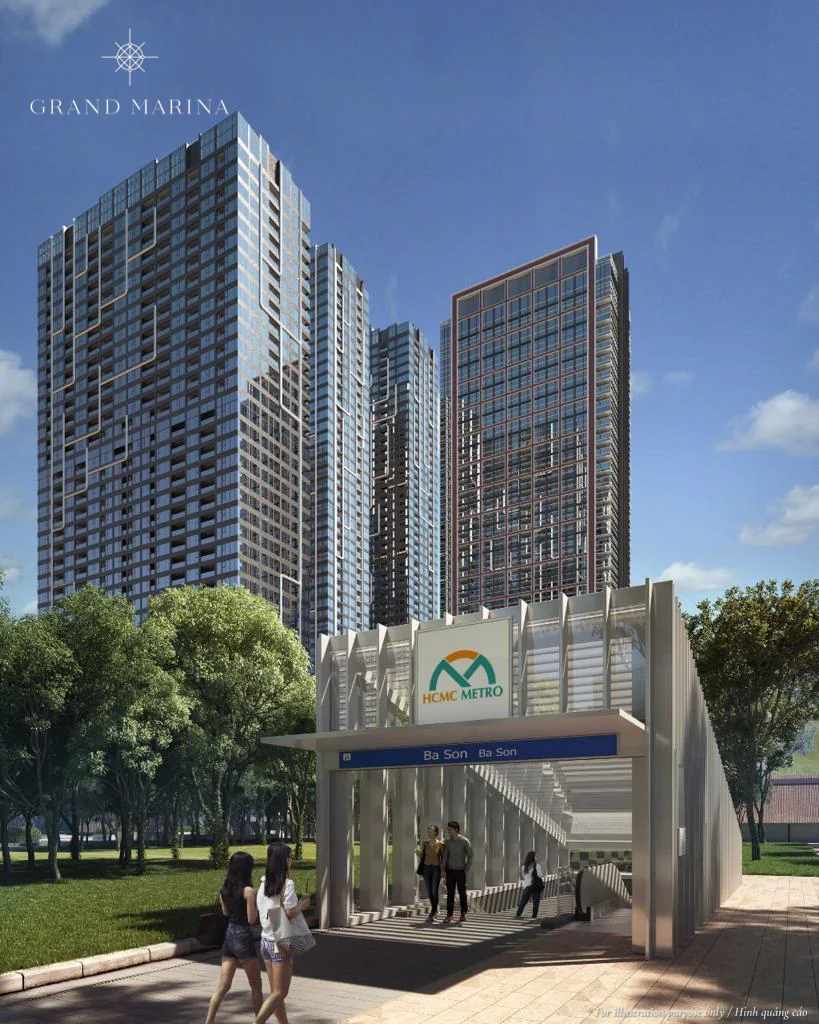
Fee risk from Marriott's 20-year operating contract
The Marriott operating contract runs for 20 years; after the 3-year subsidy, residents bear the cost and the residents' board can adjust fees or change the operator, making this a long-term variable to watch.
The Marriott and JW Marriott branding is what creates the project's value and its distinction, but it comes with a commitment to operate to international standards throughout the contract term. A few points buyers should weigh:
- The management fee can rise with inflation and actual operating costs year after year.
- Once the subsidy ends, the full service cost is borne by the resident community.
- The building's residents' board may renew or change the operator after the contract period — affecting both fees and service level.
In other words, today's 8–9 USD/m² is a starting point, not a figure fixed for the full 20 years. This is the very "carrying cost" a serious investor needs to build into the model, rather than looking only at the purchase price and hoped-for appreciation. That high service cost is also part of the reason Why Branded Residences Cost 25-35% More — you are paying extra for the operation, not just for the square metres.
How does carrying cost affect net return?
Carrying cost directly reduces the net yield, so you must deduct management fees, taxes and vacancy from the rent before judging investment performance.
According to market reference data, monthly rents at Grand Marina sit around VND 25–40 million for a 1BR, VND 40–70 million for a 2BR and VND 70–120 million for a 3BR, with a gross yield of about 3.5–5% per year. But that is the gross yield — once you subtract the management fee, rental tax and vacant months, the net yield is lower. To see how those numbers are built up, read Grand Marina Saigon Rental Yield: The Real Numbers.
Please note: the rents and yields above are indicative, based on market data at a given time, and are not a promise of returns. Actual results depend on the project, timing and policy. For foreign buyers there are additional factors — the 50-year ownership tenure and the cap of 30% of units per building — detailed in our Foreign Investor Guide to Grand Marina Returns.
Would you like a real cash-flow worksheet for a specific unit, with all carrying costs already deducted?
How can you optimise the cost of owning Grand Marina?
You can soften the impact of carrying cost by choosing a unit that fits your goal, using the 3-year subsidy period, and planning finances with year four and beyond already in mind.
A few approaches buyers often consider to optimise:
- Pick a unit sized to your actual need, since the management fee is charged per m².
- Use the first 3 subsidised years to stabilise cash flow and secure good tenants.
- Favour easy-to-let unit types to reduce the vacancy rate.
- Allow for fee increases in long-term planning, not just first-year figures.
The key is to treat a branded residence as an operating asset, not just a one-off transaction. If you're new to this concept, our piece on What are branded residences? explains why the cost model differs from a standard apartment. Once you understand both the purchase price and the cost to hold, your decision will be more confident and grounded in reality.
Note
Prices, areas and timelines may change per the developer's official announcements. Please contact us on Zalo 0903 475 802 for the latest documents and price list.