Why should foreign investors care about the USD/VND rate?
Because property transactions in Vietnam are quoted and settled in VND, the real cost of your purchase in USD shifts with the USD/VND rate at each point of remittance and payment.
A foreign investor naturally thinks in their home currency — USD, SGD, KRW or JPY — but a purchase contract at Grand Marina Saigon is written in VND. That adds a layer of variability that domestic buyers never face: the same unit listed "from ~VND 20 billion" (an indicative figure for a one-bedroom) can cost you a few percent more or less in USD simply because the rate moved between deposit and final payment.
Because payments are usually spread across a schedule (for example a ~25/75 or 30/70 plan), you do not convert the entire amount at once. That is both a risk and an opportunity: the rate may turn less favourable, but it may also improve at later instalments. Understanding this mechanism lets you plan your cash flow rather than react to it.
How does the exchange rate affect your real cost?
When the VND weakens against the USD, each dollar buys more dong, so your cost in USD falls; when the VND strengthens, your USD cost rises.
The table below illustrates this with a simple example, using an indicative price of VND 20 billion and assumed rates intended only to show the mechanism (these are not the market rates at the time you read this):
| USD/VND rate (illustrative) | Unit price (VND) | Equivalent (USD) |
|---|---|---|
| 24,000 | 20,000,000,000 | ~833,000 |
| 25,000 | 20,000,000,000 | ~800,000 |
| 26,000 | 20,000,000,000 | ~769,000 |
As the table shows, the same VND price combined with a difference of only a few thousand dong per dollar can change your real cost by tens of thousands of USD. These figures are purely illustrative; the actual price of each unit and the prevailing rate change with every sales phase — please reach us on Zalo 0903 475 802 for the latest price list.
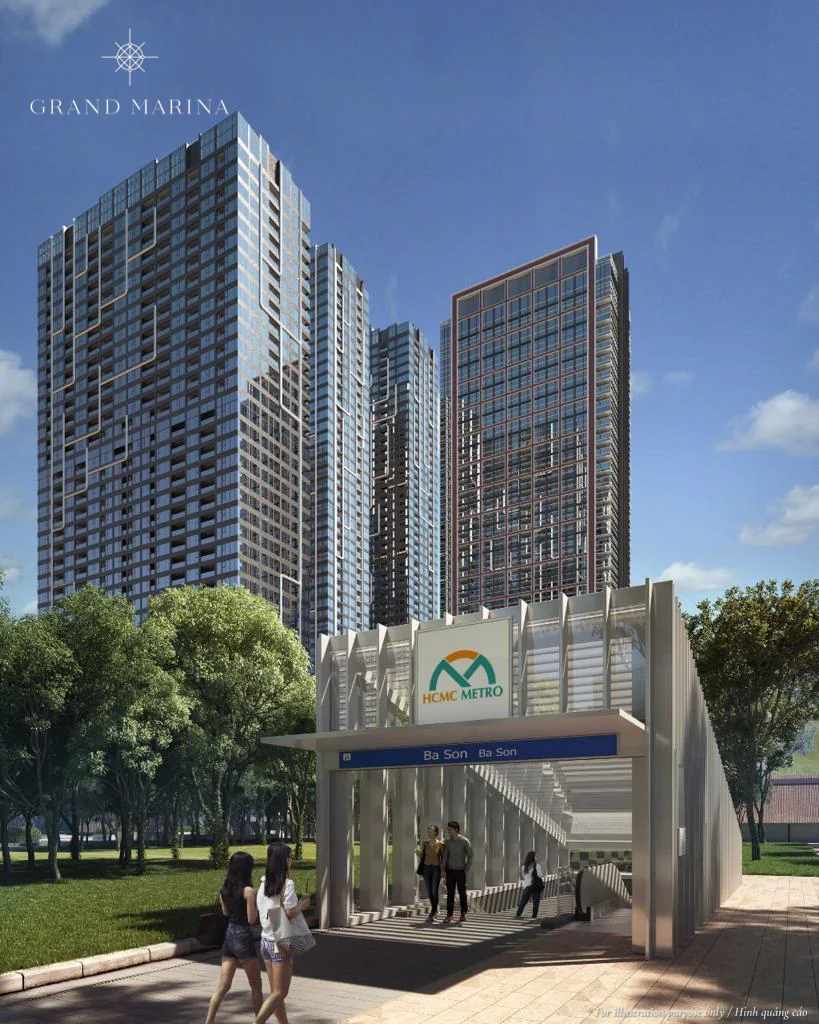
Remitting funds legally into Vietnam to buy a home
Foreign investors should remit currency through official banking channels and keep complete documentation, because this is the legal basis for later repatriating capital and profit when the property is sold.
The core principle is simple: money that comes in transparently is money that may go out. When buying a unit at Grand Marina Saigon, foreign buyers typically keep the following steps in mind:
- Remit currency through a licensed commercial bank in Vietnam, stating the purpose as "real estate purchase".
- Retain statements, international transfer (SWIFT) orders and the developer's receipts for each instalment.
- Match the name of the remitter with the buyer's name on the contract to avoid friction when withdrawing capital later.
- Consult a lawyer or accountant familiar with Vietnam's foreign-exchange rules before any large deposit.
This paperwork is not a formality — it is the "passport" that lets you prove the origin of your funds when you want to send profit or sale proceeds abroad. Our agency offers bilingual support with the documentation, but all tax and foreign-exchange matters should always be confirmed with your own advisers.
If you are weighing when to make your first transfer, our team can send the specific payment schedule for each unit so you can plan ahead.
Ownership, the 30% cap and resale liquidity
Foreigners may own a unit for 50 years (renewable under Vietnamese law) within a cap of 30% of units per building, and this supply limit shapes liquidity — the factor that decides how quickly you can withdraw your USD.
FX risk is only half the story; the other half is how quickly you can resell to "lock in" a rate when withdrawing capital. A liquid asset lets you choose a favourable moment to convert VND back to USD, rather than being forced to sell at any price. In District 1, the supply of luxury apartments is increasingly limited — you can read more in our analysis of District 1 Apartment Scarcity: A Supply Analysis.
In the branded segment, market data also shows distinct price behaviour. According to research firms such as Knight Frank and Savills (market reference for recent years, 2023–2025), branded residences are typically priced 25–35% above comparable non-branded products. This is a market reference, not a promise; actual results depend on the project, timing and policy. To understand the cash-flow side of this segment in more depth, see Branded Residences: Resale & Rental Performance Data.
Hedging FX risk: common approaches
You cannot eliminate FX risk entirely, but you can soften it by staggering when you convert, aligning transfers with the payment schedule, and consulting a currency specialist.
Below are general approaches many foreign investors consider (for reference only, not individualised financial advice):
- Transfer in tranches that match the payment schedule instead of converting everything at once.
- Track the USD/VND trend and set a target "rate band" that triggers action.
- Ask your bank about forward FX instruments if the investment is large enough.
- Build a margin for currency movement into your total budget.
The key is to be proactive: because payments are spread across the schedule, you have more "windows" to time the rate than with a single outright purchase. Every investor has a different risk appetite, so check with your own adviser before deciding.
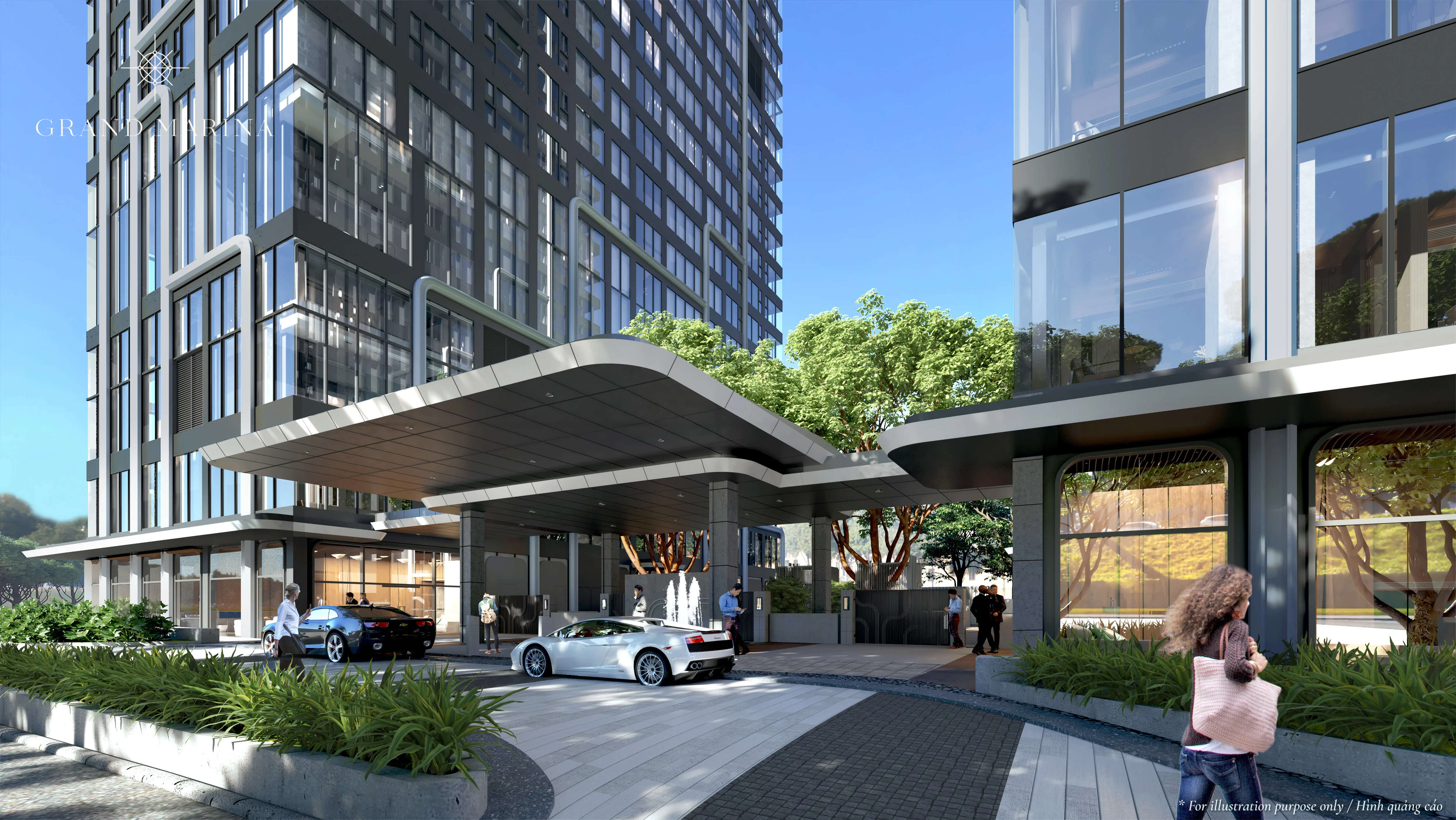
Why does a USD-denominated mindset asset appeal to foreign investors?
A luxury property in a scarce location such as District 1 is often seen as a store of value, helping foreign investors diversify their assets beyond their home currency.
Beyond the FX question, many international buyers view a branded residence as a way to allocate wealth out of their home currency and into a growing market. This demand is not a passing trend — you can learn more in Foreign Demand for Vietnam's Luxury Property.
Grand Marina Saigon is Vietnam's first Marriott & JW Marriott branded residences, developed by Masterise Homes in Ba Son, District 1, right beside the Saigon River and about 250 m from Ba Son metro station. Confirm handover dates and occupancy status against the documents for the specific tower and unit. The combination of a core central location, an international brand and Marriott's management is why so many foreign investors take interest — details are on the About the project page.
If you would like a clear summary of the cost in your own currency and the paperwork path for foreigners, we can walk you through it step by step.
Note
Prices, areas and timelines may change per the developer's official announcements. Please contact us on Zalo 0903 475 802 for the latest documents and price list.