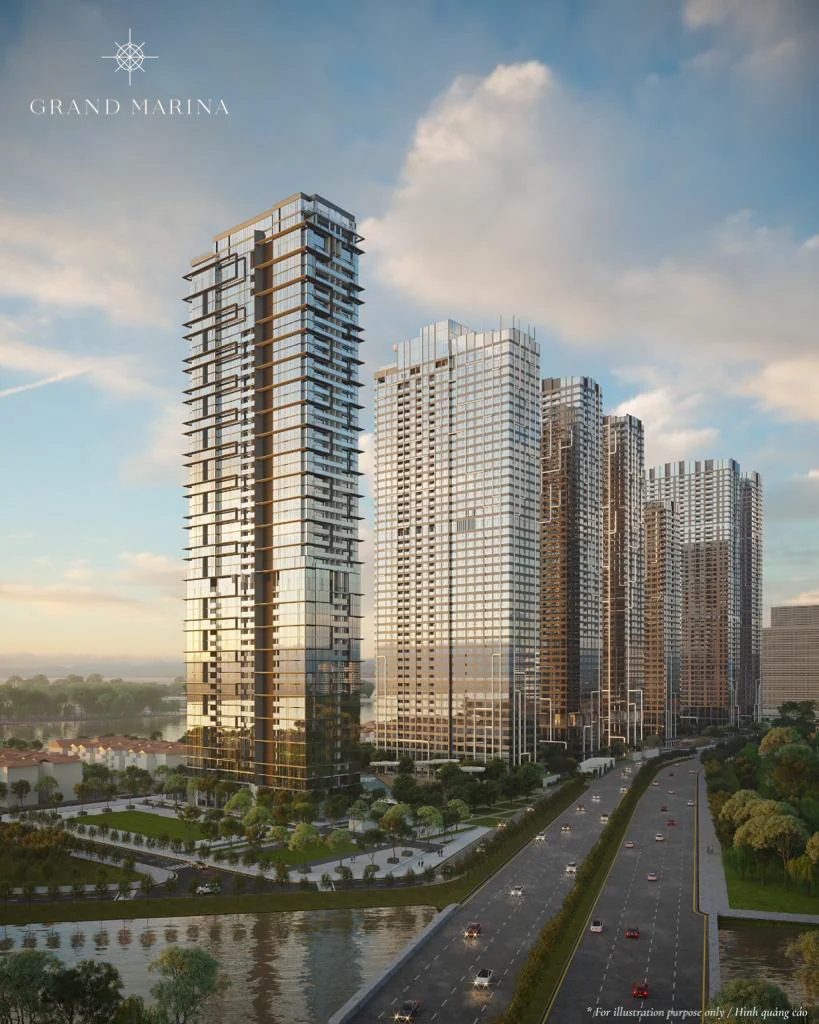
Foreigners living and working in Ho Chi Minh City keep asking the same questions: can a foreigner actually buy property in Vietnam, what type, for how long, and what is the process? This guide pulls the whole picture together — from eligibility and the 50-year ownership term to the 30% per-building quota and the practical steps — using the branded-residence project Grand Marina Saigon (Masterise Homes × Marriott, Ba Son, District 1) as a concrete example.
Can foreigners buy property in Vietnam?
Yes — foreign individuals who legally enter Vietnam may buy and own apartments in eligible commercial projects under the Housing Law.
The current framework (the 2023 Housing Law, in force from 2025 and continuing the openness of the 2014 Housing Law) lets foreigners own homes in Vietnam under a few clear conditions. The key points are that you must have entered the country legally, and the apartment must sit within a commercial project cleared for foreign sale — not in an area restricted for defence or security reasons.
Grand Marina Saigon is a commercial project developed by Masterise Homes, already eligible and actively trading with both Vietnamese and foreign buyers. To understand exactly who qualifies and which entry documents are accepted, see Foreigner Eligibility: Who Can Buy Property in Vietnam?.
What does 50-year ownership really mean?
Foreigners receive ownership of an apartment for a 50-year term that is renewable under Vietnamese law.
This is the biggest difference from Vietnamese buyers. Vietnamese citizens receive a long-term pink book with full rights to use, transfer, lease and inherit. Foreigners receive a 50-year ownership term — but during that period they still hold full rights to live in, lease, resell and pass on the apartment.
Many people wrongly assume "50 years" means losing everything afterwards. In practice the law allows renewal on expiry, and if the unit is sold to a Vietnamese buyer it can convert to long-term ownership. For the Officetel product at Grand Marina, the tenure is likewise 50 years.
| Criterion | Vietnamese buyer | Foreign buyer |
|---|---|---|
| Ownership term | Long-term (pink book) | 50 years, renewable |
| Lease / transfer rights | Yes | Yes |
| Inheritance rights | Yes | Yes (per regulations) |
| Units allowed per building | No limit | Up to 30% of units |
| Bank loan | Up to 70% | Subject to each bank's terms |
The table above is a reference comparison of rights between the two buyer groups. All details on paperwork, contracts and term renewal should be reconfirmed with the project's legal team before you decide.
If you want to know the actual remaining ownership term on a specific Grand Marina unit, just message us and we will check it for you.
What is the 30% quota and why does it matter?
Foreigners may own at most 30% of the total apartments in any single building, so the number of "slots" for overseas buyers is limited.
This rule balances attracting foreign investment with keeping housing supply available for local residents. The practical consequence is that, in a given tower, once the 30% cap is full, no foreigner can register a new unit there until a slot frees up through resale.
Because Grand Marina has several towers (Lake, Lagoon, Cove, Sea) with different unit mixes, each tower's quota differs and shifts from one sales phase to the next. That is why it pays to confirm the foreign-quota status of the exact tower and unit type before placing a deposit.
What are the steps in the buying process for foreigners?
The basic flow is: choose the unit, check the foreign quota, sign the contract, pay by schedule, and receive the ownership certificate.
- Step 1 — Choose the project and unit: decide on the unit type (1BR, 2BR, 3BR, Dual-Key, Sky Villa, Penthouse) and the right tower.
- Step 2 — Check eligibility: confirm valid entry documents and that a slot remains within that tower's 30% quota.
- Step 3 — Deposit & sign the sale contract: a bilingual contract, with translation support for foreign buyers.
- Step 4 — Pay by schedule: following your chosen method (for example 25/75 or 30/70, or a fast payment to earn a discount).
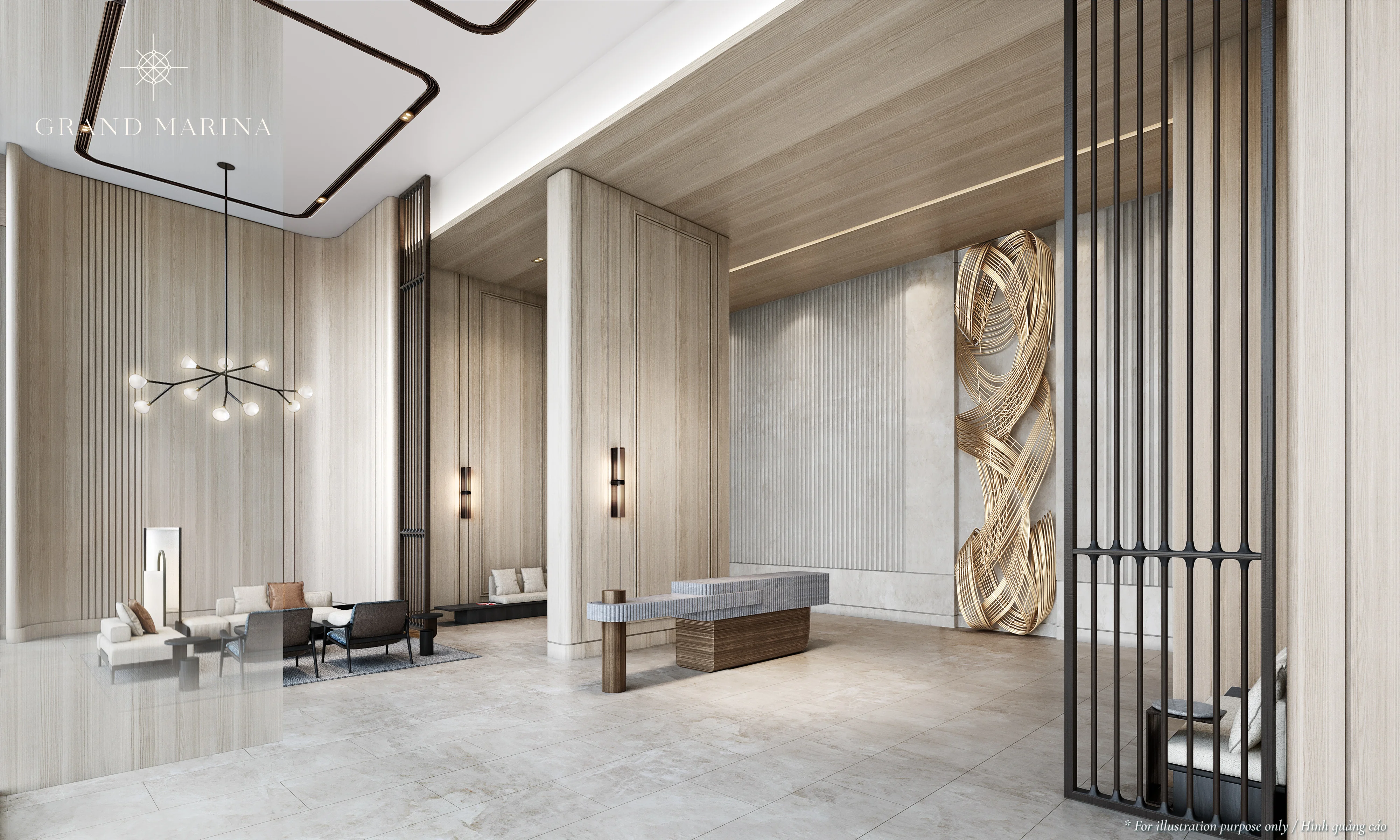
- Step 5 — Handover and certificate: receive the apartment fitted to Marriott standard and complete the ownership-certificate procedure.
Each step needs the matching set of documents prepared in advance. You can preview the full list in Document Checklist for Foreign Buyers in Vietnam so nothing is missing when you reach the signing stage.
How much does buying at Grand Marina cost?
Beyond the unit price, buyers should budget for 10% VAT, a 2% maintenance fee and a Marriott-standard management fee.
Indicative prices (illustrative, changing by phase): a 1BR from around VND 20 billion, 2BR from around VND 35 billion, 3BR from around VND 60 billion, Sky Villa from around VND 100 billion; Penthouse on request. On top of that come 10% VAT, a 2% maintenance fee (one-off), a management fee of roughly USD 8–9/m²/month (subsidised by the developer for the first 3 years), and a 0.5% registration fee.
These figures are indicative only and change with each sales release. For the latest price list and payment options, see the Pricing & Payment page or contact us directly for the detailed file.
The part that most concerns overseas buyers is usually the cash flow when they later resell.
Is resale and moving money abroad straightforward?
Foreigners may resell their apartment and remit the sale proceeds abroad, but must follow foreign-exchange rules and prove the funds came in legally.
This matters most to investment-minded buyers. To resell smoothly, your original money into Vietnam should have entered through a legal channel (international transfer, a capital account) so that remitting the sale proceeds out later goes through cleanly. The detailed process is covered in Repatriating Sale Proceeds Out of Vietnam Legally.
On value outlook, Knight Frank and Savills market reports over 2023–2024 indicate that branded residences are typically priced 25–35% above comparable non-branded luxury units. This is market reference data, not a promise — actual results depend on the project, timing and policy. If the concept is new to you, read What are branded residences?.
Common questions when foreigners buy
Most questions revolve around the 50-year term, the 30% quota, bank loans and renting the unit out.
- Can foreigners take a bank loan? It depends on the terms and policy of each partner bank (Techcombank, VPBank, MB, BIDV).
- Can I rent the unit out afterwards? Yes — you may lease during the ownership term, and Marriott operates many resident-support services.
- What happens after 50 years? It can be renewed under the regulations; if sold to a Vietnamese buyer it may convert to long-term ownership.
Many other situations depend on each person's paperwork. You can read more on the FAQ page, or message us privately for an answer specific to your case. Note that all guidance here is general; review the legal documents and the specific price list carefully before deciding.
Note
Prices, areas and timelines may change per the developer's official announcements. Please contact us on Zalo 0903 475 802 for the latest documents and price list.