When weighing up a Marriott branded residence at Grand Marina Saigon in Ba Son, District 1, investors face two very different financing routes: a bank loan of up to 70% of the unit value with 0% interest until handover, or a fast payment of 95-100% that unlocks an 8-12% discount. The key question is not "which is cheaper" but "which lifts the return on the cash I actually put in." This article models that leverage effect using illustrative numbers.
Does 70% leverage really increase your return?
Yes — in theory, a 70% loan magnifies the return on your own cash when asset appreciation exceeds the cost of borrowing, but it magnifies risk just as sharply in the opposite direction.
Leverage works on a simple principle: you control a large asset with a small amount of cash. If you put in 30% equity and the asset appreciates 10%, that gain is calculated on the entire unit value rather than just your equity — so your cash-on-cash return is much higher than 10%.
But this only holds while the market rises. If prices stay flat or fall, or if the post-grace-period interest rate is higher than expected, leverage erodes returns just as fast. That is why the numbers have to go on the table before any decision.
How do Grand Marina's two payment plans differ?
Grand Marina offers a bank-loan plan (0% interest until handover, up to 70% borrowing) and a 95-100% fast-payment plan with an 8-12% discount — each suited to a different investor profile.
- Leverage plan: a roughly 25/75 or 30/70 schedule, partner banks (Techcombank, VPBank, MB, BIDV) lend up to 70% of value, terms up to 25 years, with 0% interest until handover.
- Fast-payment plan: pay 95-100% early to receive an 8-12% discount on the listed price.
Confirm developer inventory and resale availability for the exact unit at the time of enquiry. Always confirm the current policy for the specific unit on Zalo.
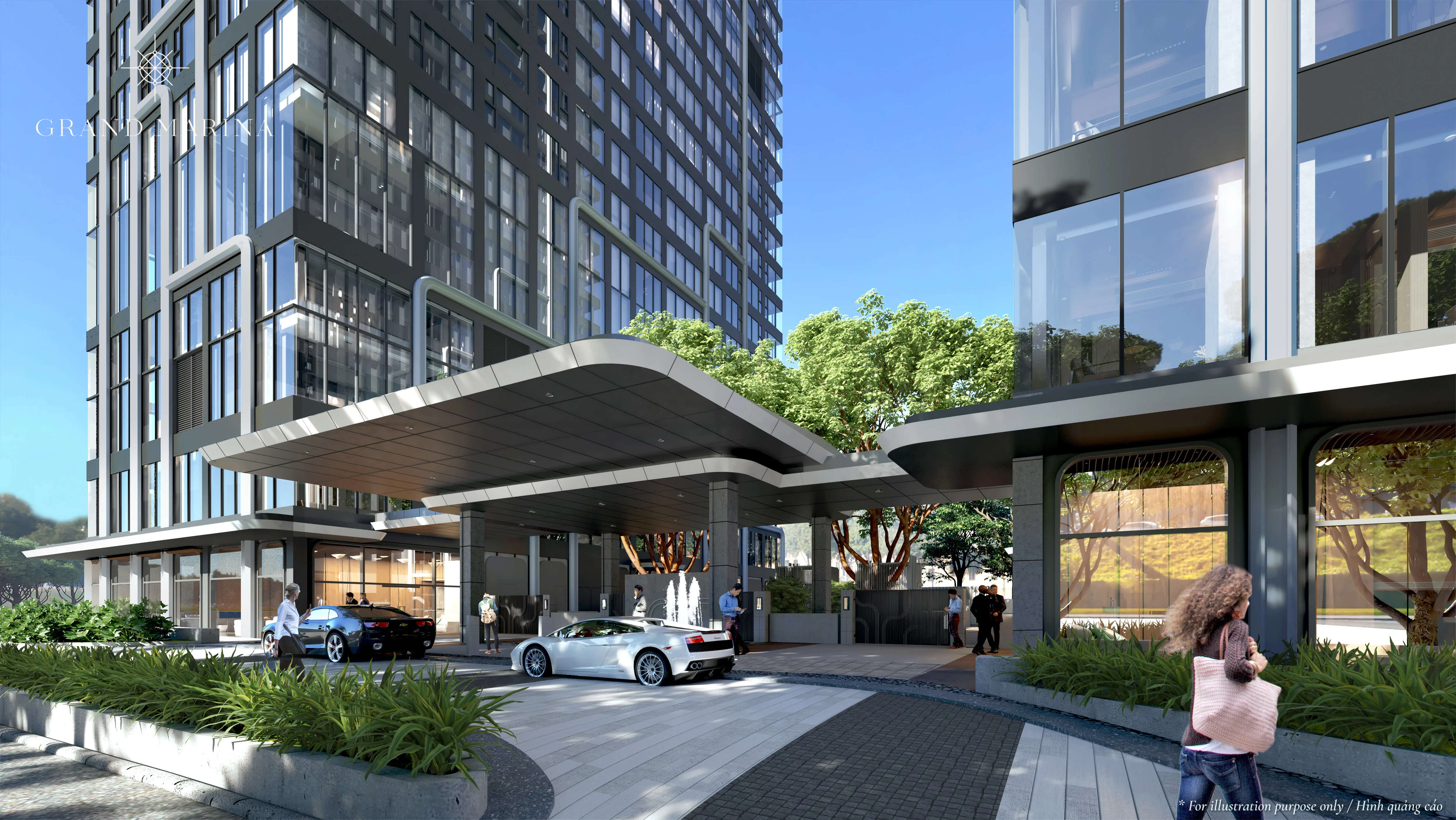
A cash-on-cash example: the same ~VND 20bn 1BR
For the same 1BR with an indicative price of ~VND 20bn, the leverage plan needs less of your own cash so it amplifies the return on equity, while the fast-payment plan lowers the purchase cost but ties up more cash.
The table below is a purely illustrative example to show the mechanism — it is not an actual quote and not a promise of returns. Simple assumptions: hold for 3 years, an assumed appreciation of 8% per year (a figure used for illustration, not a forecast), ignoring transaction taxes and the opportunity cost of cash.
| Item | 70% leverage plan | Fast-payment plan |
|---|---|---|
| Listed price | VND 20bn | VND 20bn |
| Discount | — | 10% (assumed, within 8-12%) |
| Actual price paid | VND 20bn | VND 18bn |
| Initial equity | ~VND 6bn (30%) | VND 18bn (~100%) |
| Bank loan | VND 14bn (≤70%) | 0 |
| Assumed value after 3 years (+8%/yr) | ~VND 25.2bn | ~VND 25.2bn |
| Gross gain before loan interest | ~VND 5.2bn | ~VND 7.2bn |
The crux: under the leverage plan, the ~VND 5.2bn gain is generated from only ~VND 6bn of equity — a very high return on cash in nominal terms. Under the fast-payment plan, the ~VND 7.2bn gain is larger in absolute value but is generated from VND 18bn of cash, so the return on cash is lower. Crucially, neither figure yet subtracts loan interest after the grace period — the decisive factor below.
Want to see these numbers applied to the exact unit and floor you like? Our team can build a tailored model for you.
How does loan interest eat into your return?
Leverage only increases net return when the appreciation rate outpaces the loan interest after the grace period — otherwise the interest you pay erodes the leverage advantage.
The 0% interest until handover is a major plus, but it has a deadline. After the grace period ends, the VND 14bn loan begins accruing interest at the partner bank's floating rate. If you hold the asset for several years past handover, accumulated interest can be significant.
This is where rental cash flow becomes important: if the unit is leased out, rent can offset part (or all) of the monthly interest payment. How you run the rental — Short-Let vs Long-Let: Grand Marina Economics — directly affects whether the leverage can "pay for itself." Per market data, the project's indicative rental yield sits around 3.5-5% per year, so you should weigh that figure against the actual loan rate.
When to choose leverage, and when to pay fast?
Choose leverage if you want to keep cash flexible and believe in long-term appreciation; choose fast payment if you have the capital, want to lock in a certain discount and avoid interest-rate risk.
- Leverage suits: investors who want to spread capital across several assets, expect prices to rise, and have steady rental cash flow to service interest.
- Fast payment suits: buyers with cash on hand who prioritise a certain 8-12% reduction in cost basis and don't want exposure to rate volatility.
An important note for foreign buyers: ownership is 50 years (renewable per Vietnamese law) and each tower is capped at 30% of units for foreigners; Vietnamese buyers receive a long-term pink book and can borrow up to 70%. Your eligibility and loan terms depend on your personal profile and the bank's rules at the time of borrowing. Full payment details are on the Pricing & payment page.
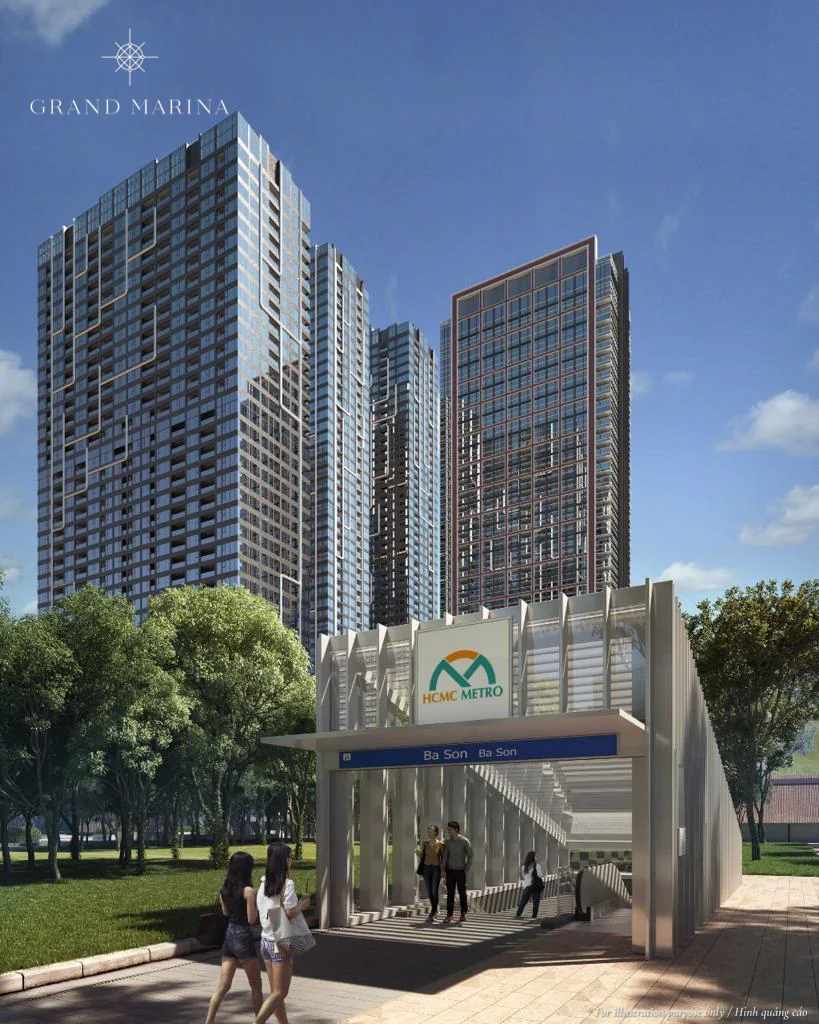
How does leverage affect your exit strategy?
Leverage shapes not just the purchase but the sale: if you sell while loan principal is still high, the interest already paid and the real secondary-market price will determine your final return.
Because Grand Marina is already handed over with an active secondary market, reselling depends on real supply and demand at the time of sale — there is no guarantee prices will rise. You can read more in Reselling Grand Marina: The Exit Strategy to understand how the exit works. If you're deciding between areas, Grand Marina vs Thu Thiem: Which to Invest In? is also worth a look.
On valuation, per Knight Frank and Savills (market reports from 2023-2024), branded residences are typically priced 25-35% above comparable non-branded luxury units — this is a market reference, not a promise of appreciation for any specific unit. To understand why the brand factor matters for asset value, see What are branded residences?
Every unit, floor and timing carries a different pricing and interest policy — don't decide on generic figures.
Note
Prices, areas and timelines may change per the developer's official announcements. Please contact us on Zalo 0903 475 802 for the latest documents and price list.