When investors weigh luxury riverside property along the Saigon River, two names keep landing on the table: Grand Marina Saigon at Ba Son (District 1) and the Thu Thiem new urban area just across the water. One is a fully established downtown product; the other is an emerging masterplan full of potential. This article compares the two honestly along the four axes investors care about most: price, liquidity, yield and risk.
What is the fundamental difference between Grand Marina and Thu Thiem?
Grand Marina is a finished product in the existing District 1 core, while Thu Thiem is a 657-hectare new urban area still taking shape — that core difference drives every investment factor.
Grand Marina Saigon sits at No. 02 Ton Duc Thang, Ben Nghe Ward, District 1 — on the historic Ba Son riverfront, 200 m from the Saigon River and about 250 m from the Ba Son Metro station. It is Vietnam's first Marriott & JW Marriott Branded Residences, developed by Masterise Homes. Confirm handover dates and occupancy status against the documents for the specific tower and unit.
Thu Thiem, by contrast, is a 657-hectare new urban area facing Grand Marina across the river. Its infrastructure is steadily maturing — Thu Thiem Bridge 2 is open, while many sub-zones are still under construction. The long-term upside is significant, but the timeline depends on masterplan rollout and public infrastructure spending.
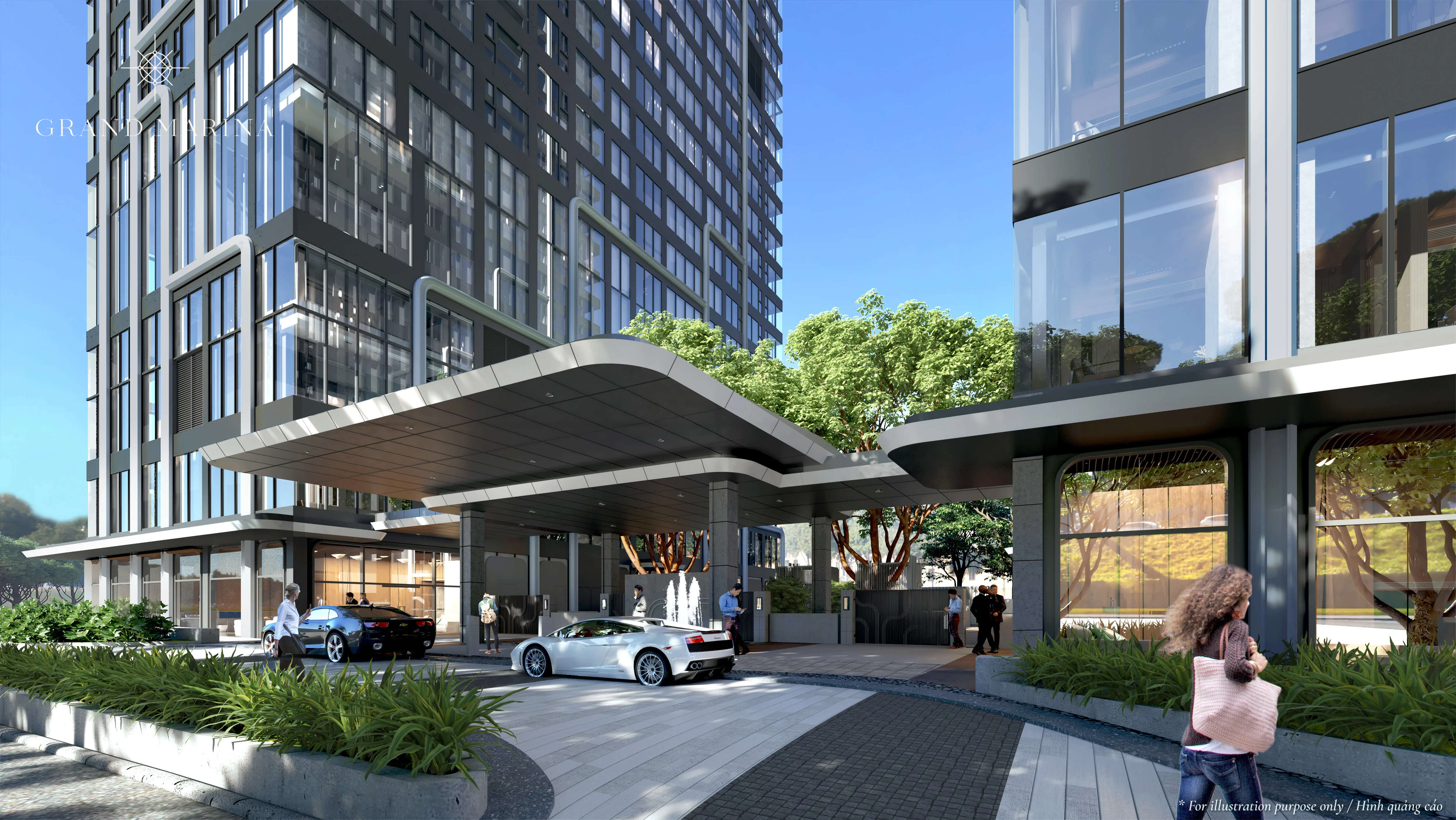
Price comparison: paying for established location or future potential?
Grand Marina commands premium pricing for an established downtown core, while Thu Thiem typically offers a wider price range as a developing area.
At Grand Marina, indicative prices range roughly 400–600 million VND/m² depending on unit type and tower: 1-bedroom units from around 20 billion VND, 2-bedroom from around 35 billion, 3-bedroom from around 60 billion, and Sky Villas from around 100 billion. This pricing reflects two things: the District 1 core location and the "brand premium" of a Marriott branded residence.
According to research firms such as Knight Frank and Savills (market reference, 2023–2025), branded residences are typically priced 25–35% above comparable non-branded luxury units. This is a market reference, not a promise of appreciation. If you want to understand where that gap comes from, read Why Branded Residences Cost 25-35% More.
| Criterion | Grand Marina (Ba Son, D1) | Thu Thiem (new urban area) |
|---|---|---|
| Status | Handed over, residents living in | Emerging, many zones under construction |
| Location | District 1 core, 200 m to river | East bank, facing District 1 |
| Operating brand | Marriott & JW Marriott | Varies by project |
| Indicative price | ~400–600M VND/m² | Varies widely by zone |
| Connectivity | Ba Son Metro ~250 m (operating) | Thu Thiem Bridge 2 open |
The table above is indicative and reflects the general profile of each area — prices, areas and timelines at Grand Marina may change per sales phase. Thu Thiem projects vary so much that no single representative figure applies.
Liquidity: where is it easier to resell?
Grand Marina holds a liquidity edge thanks to a tangible, handed-over product and an active secondary market, whereas resale at many Thu Thiem projects still hinges on handover progress.
For investment property, liquidity — the ability to resell quickly and at the right price — matters as much as the purchase price. Grand Marina has several clear advantages here:
- The product is complete, so secondary buyers can view the actual unit rather than buying off-plan.
- The District 1 core attracts a steady pool of international and high-income Vietnamese buyers.
- The Marriott & JW Marriott brand is an easy identifier to market on resale.
- The secondary market has been active from 2024–2026 with real transactions.
This does not mean every unit sells fast — real-world liquidity still depends on unit type, floor, orientation and market timing. To understand how the secondary market works and what to watch when exiting, see Reselling Grand Marina: The Exit Strategy.
If you are torn between the two areas and want to see recent actual transaction data, do not decide alone.
Rental yield: what are the real numbers?
Grand Marina enjoys ready rental demand from expats and luxury tenants right in District 1, with an indicative yield of about 3.5–5% per year.
At Grand Marina, indicative rents run: 1-bedroom around 25–40 million VND/month, 2-bedroom around 40–70 million, 3-bedroom around 70–120 million — implying an indicative yield of about 3.5–5% per year. The advantage is that the target tenants — foreign professionals and business executives — are already present in the center, close to offices and amenities.
For Thu Thiem, rental demand is growing as residential and office occupancy fills out. The long-term growth potential is attractive, but at this stage many areas are still forming their resident community, so rental cash flow may be less stable than in the established core.
An important note: rental yield is only part of the picture. You must subtract annual holding costs such as the management fee (~8–9 USD/m²/month) and others. Run the full numbers via Grand Marina's True Annual Holding Cost before concluding on net yield.
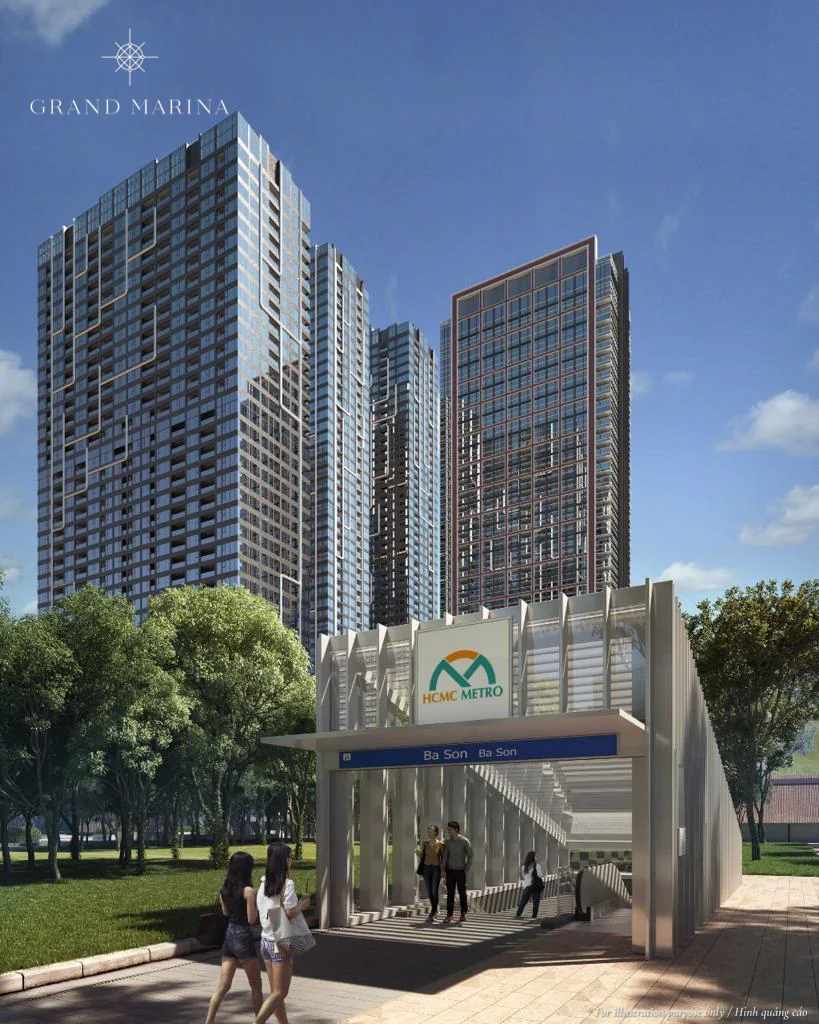
Risk profile: stability or a bet on the future?
Grand Marina leans toward lower-risk, steady growth thanks to completed handover, while Thu Thiem is a higher-growth play that carries timing and masterplan risk.
Each area suits a different risk appetite:
- Grand Marina: a tangible product, an established core location and an international operating brand — construction-progress risk is effectively gone because it is already handed over.
- Thu Thiem: upside tied to infrastructure, but dependent on masterplan rollout, public spending and completion timing — more variables in play.
No option is "always better." Actual results depend on the specific project, the timing of entry and the policy environment at the time. For investors who prioritize capital preservation and stable cash flow, a completed product in the central core tends to feel safer. For those willing to accept higher risk for a larger growth margin over time, the new urban area may be a better fit.
Does foreign ownership differ between them?
Foreign-ownership rules are uniform under Vietnamese law, but the 30%-per-building cap makes foreign supply at central projects like Grand Marina scarcer.
Foreigners buying apartments in Vietnam hold 50-year ownership, renewable per the law, with the right to transfer and lease. However, each building may sell at most 30% of its units to foreigners. At sought-after central projects like Grand Marina, this 30% "room" tends to fill quickly, making the foreign-buyer allocation scarce — a factor that supports long-term value.
Vietnamese buyers receive a long-term pink book with full rights to use, transfer, lease and inherit, and can borrow up to 70% from banks. To understand why the branded-residence model is priced and managed differently, read What are branded residences? For the detailed price list and payment options, see the Pricing & payment page.
So, Grand Marina or Thu Thiem?
Choose Grand Marina if you prioritize a finished product, liquidity and steady rental cash flow in the District 1 core; consider Thu Thiem if you invest long-term and accept timing risk for a larger growth margin.
In short, this is not a winner-takes-all race — it is about choosing the play that matches your goals and risk appetite. Grand Marina suits those who want to hold a tangible, internationally managed asset right in the center. Thu Thiem is a bet on the urbanization of the Saigon River's east bank.
Every investor's situation is different — don't choose on instinct alone.
Note
Prices, areas and timelines may change per the developer's official announcements. Please contact us on Zalo 0903 475 802 for the latest documents and price list.